
The Sassy Hippies
Bold, funny and inclusive pages with a groovy twist.
View book

Real pages from the book, as you will find them inside.
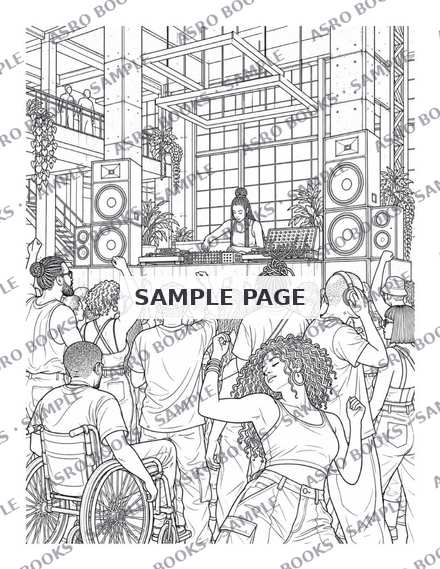

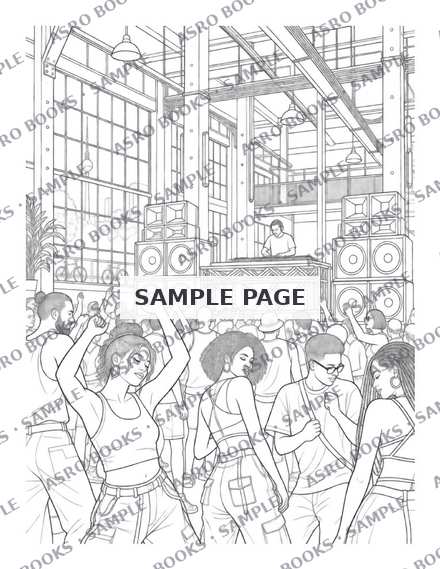
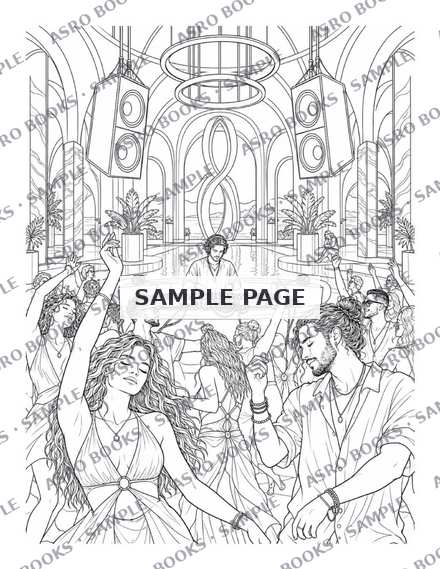

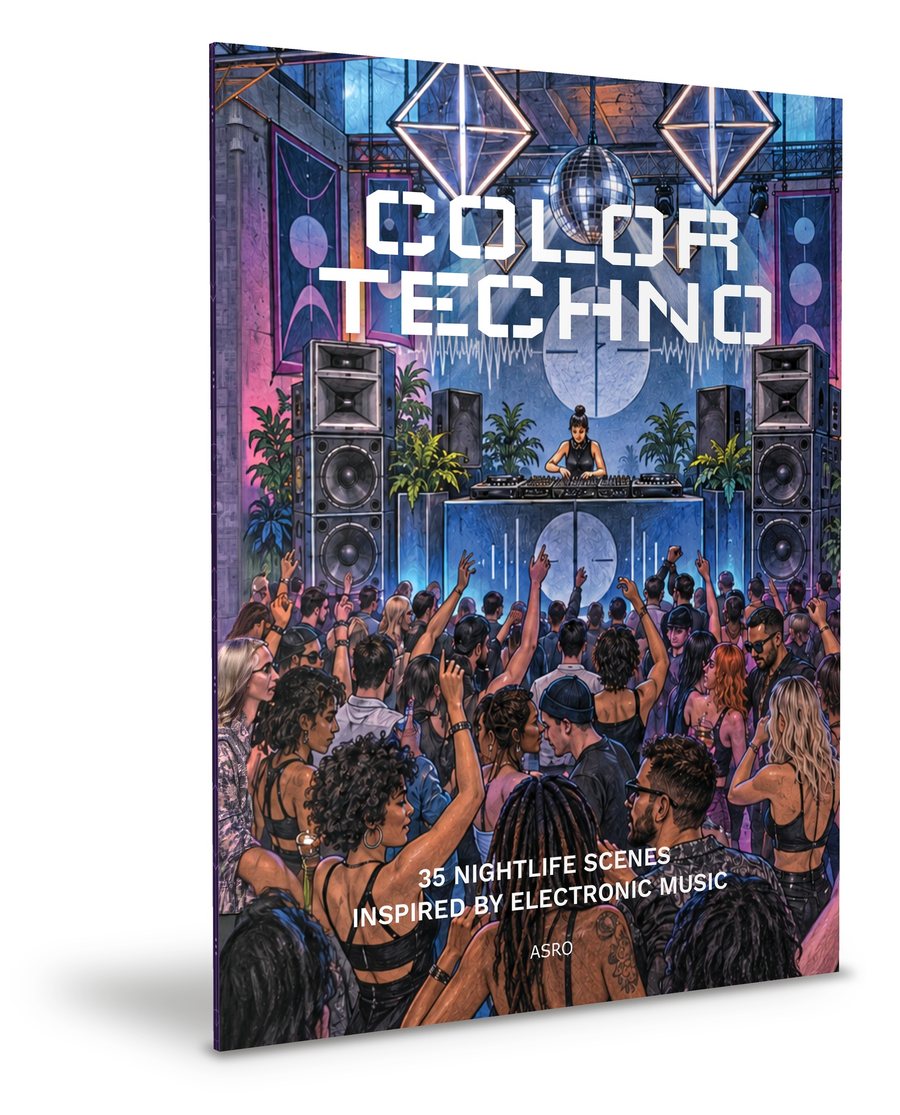
From the first Detroit techno beats to the neon glow of a future rave. Color Techno takes you through 35 realistic nightlife scenes from the history of electronic music, each with a short backstory, a fun fact and a color tip.
Every (former) raver, DJ or music lover who would rather pick up a pencil to the rhythm of the bass.
| Pages to color | 35 |
|---|---|
| Size | 8.5 × 11 in (21.6 × 27.9 cm) |
| Printing | Single-sided |
| Binding | Paperback |
| Language | English |
The story behind the book
Techno was born in Detroit in the mid-1980s. Three friends from the suburb of Belleville, Juan Atkins, Derrick May and Kevin Saunderson, mixed the cold synthesizers of European electronic music with the funk and soul of their city. The result sounded like the future: mechanical, hypnotic and made for dancing.
The records crossed the Atlantic fast. In the UK they fed the acid house summers of the late eighties. In Berlin, the fall of the Wall in 1989 opened empty factories, bunkers and power stations, and techno moved in. Clubs like Tresor turned former vaults into dance floors, and the Love Parade brought the sound to the streets.
Since then techno has split into countless styles, from minimal to hard and melodic. What stayed is the setting you color in this book: dark rooms, strong light, and a crowd moving to one beat.
Bold, funny and inclusive pages with a groovy twist.

Relaxing scenes for cat lovers.

Remarkable trees and forests from six continents.