
From the book: Color Techno
From Detroit to Berlin: a short history of techno
Techno was born in Detroit in the mid-1980s. Three friends from the suburb of Belleville, Juan Atkins, Derrick May and Kevin Saunderson, mixed the cold synthesizers of European electronic music with the funk and soul of their city. The result sounded like the future: mechanical, hypnotic and made for dancing.
The records crossed the Atlantic fast. In the UK they fed the acid house summers of the late eighties. In Berlin, the fall of the Wall in 1989 opened empty factories, bunkers and power stations, and techno moved in. Clubs like Tresor turned former vaults into dance floors, and the Love Parade brought the sound to the streets.
Since then techno has split into countless styles, from minimal to hard and melodic. What stayed is the setting you color in this book: dark rooms, strong light, and a crowd moving to one beat.
View book

From the book: The Sassy Hippies
Flower power: where the hippie look came from
In the mid-sixties, young people in San Francisco's Haight-Ashbury district started dressing against the grain. Second-hand clothes, Indian prints, beads, bare feet and long hair were a way of saying no to war, suits and sameness.
The look peaked in the Summer of Love of 1967 and reached a worldwide audience at Woodstock in 1969. Concert posters from that time, with their swirling letters and vibrating colors, became an art form of their own.
Flowers were the symbol of it all: protesters handed them to soldiers and wore them in their hair. This book borrows that spirit, with more humor and room for everyone.
View book

From the book: Chilling Cats
Why cats sleep so much
An adult cat sleeps around 12 to 16 hours a day, and kittens and older cats even more. That is not laziness. Cats are built as hunters that save energy for short, intense bursts of action.
Much of that time is light sleep. Ears keep turning and one eye may open at the smallest sound. Cats are also most active at dawn and dusk, which is why they nap through so much of the day.
They pick their spots carefully: warm, safe and preferably high up. That is exactly where you will find them in this book, on windowsills, cushions and stacks of books.
View book

From the book: The World of Trees
The oldest trees on Earth
High in the White Mountains of California grows a Great Basin bristlecone pine known as Methuselah. It is more than 4,800 years old, which means it was already a young tree when the pyramids of Giza were built. Its exact location is kept secret to protect it.
In Sweden, a Norway spruce called Old Tjikko looks modest, but its root system has kept sprouting new trunks for around 9,500 years.
Trees like these survive by growing slowly, in harsh places where little else competes. They are a good reminder of what this book is about: taking your time.
View book
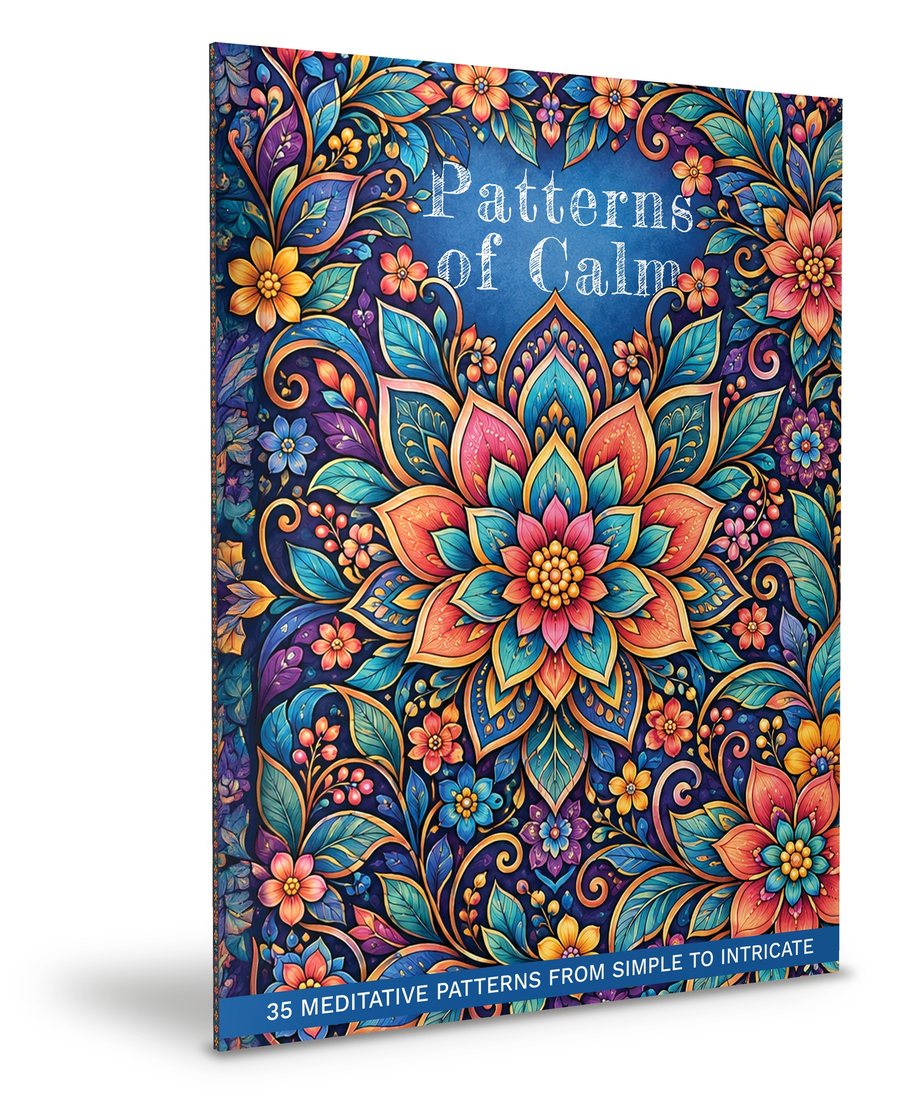
From the book: Patterns of Calm
Patterns, a very old way to slow down
People have been drawing repeating patterns for as long as they have been making things. You find them on prehistoric pottery, in Islamic tiles, in Celtic knots and in the mandalas of Hindu and Buddhist traditions, where creating a pattern is a form of meditation in itself.
The appeal is simple. A repeating shape asks for just enough attention to quiet the rest of your thoughts, without asking you to make big decisions.
That is the idea behind this book. The patterns start simple and become richer, so you can choose how much focus you want to give each evening.
View book

From the book: Luna the Cat: Saving Aliens in Space
Why stories and coloring go together
Young children love to hear the same story again and again, and they love to make something with their hands. Luna's book combines the two: every short story part has its own page to color.
Hearing a story first gives a child something to think about while coloring. Is Luna happy here? What is the alien saying? Coloring then becomes a way to retell the story in their own colors.
That is also why the story is one continuous adventure. Children can pick up where they left off, page by page, until Luna falls asleep and dreams of her new friends.
View book

From the book: Storms vrolijke Toverwereld
Coloring with little hands
For young children, coloring is about much more than staying inside the lines. Holding a crayon builds the small muscles they will later use for writing, and choosing colors is one of their first chances to make their own decisions.
At ages 3 to 5, big shapes and clear outlines work best. That is why every page in this book has room to scribble freely and still end up with a picture to be proud of.
Praise the effort rather than the result, and hang the finished page somewhere they can see it. Nothing motivates more.
View book