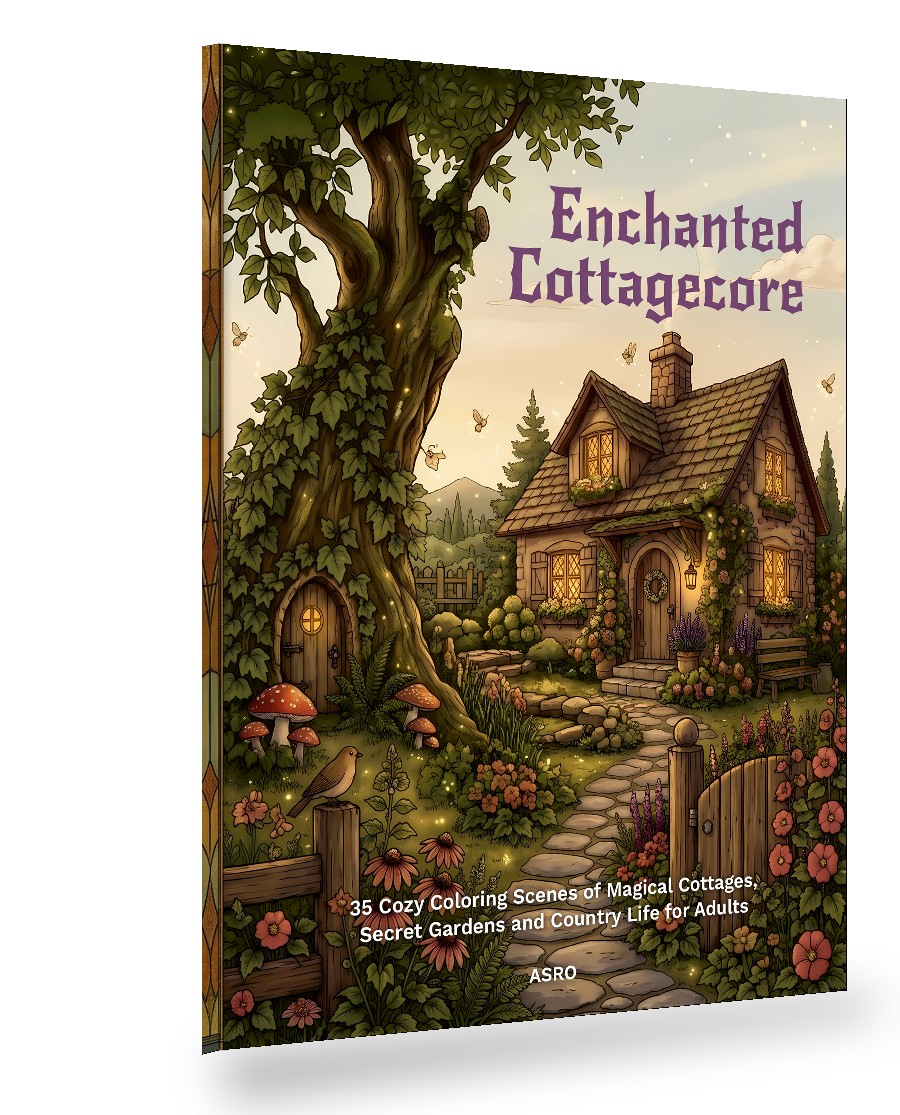
From the book: The Enchanted Cottagecore Coloring Book
Where the kettle is always on
It starts with a cottage beneath an elder tree: a quiet doorway, a crooked roof, and a tree old enough to remember every spring. From there, the path leads through herb gardens and over a willow bridge, past a beekeeper's garden and a mushroom reading nook.
Read the story
Every scene comes with a few words to set the mood and a palette to begin with. Breakfast in the herb garden suggests lavender, chamomile yellow and china blue. A moonlit path asks for something cooler.
The magic in this book is small and kind: a hedgehog with a lantern, a sleeping cat on a windowsill, a door at the edge of the orchard. Color slowly, one corner at a time.
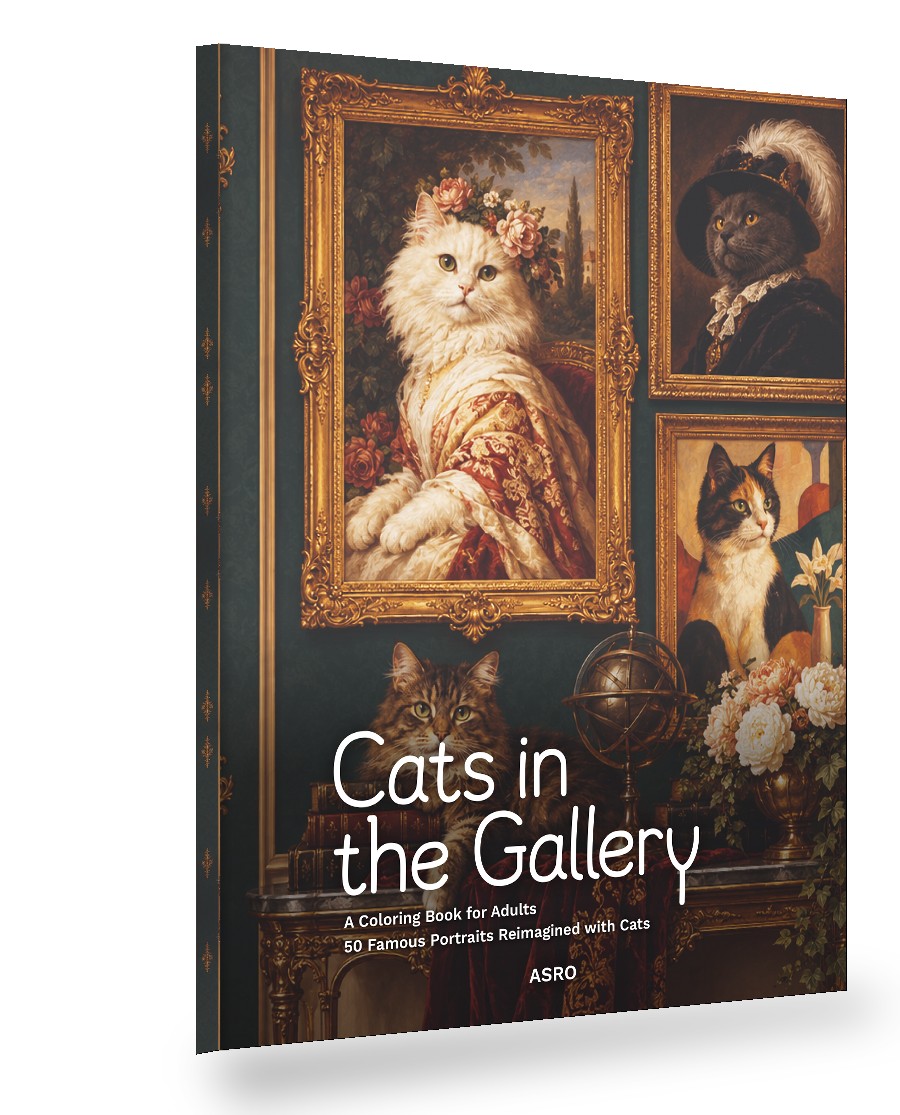
From the book: Cats in the Gallery
The story behind the portrait
Mona Purrisa liked to paint slowly, adding a little to a canvas each morning. Janna van Whisk polished a pearl until it caught the window light. Every portrait in this book has its own cat artist, with habits, studios and models of their own.
Read the story
The cat artists and their adventures are invented, but each story is woven around real details: when a painting was made, who sat for it, or how the artist worked. Read it as a playful starting point for curiosity about the original.
The illustrations are original cat compositions made for coloring, not reproductions. Some invite you to follow the famous colors, others are an open invitation to hang your own version in the gallery.

From the book: The Four Cats Who Saved Christmas
Meet the four cats
Luna is clever and caring, with a magnificent fluffy tail, and she loves a good plan. Storm is small and brave and surprises everyone, especially himself. Tokio, the little black cat, prefers to watch before he pounces and notices everything. And Nova, the oldest and biggest, is a striped tabby full of inventive ideas, usually several at once.
Read the story
Together they throw a cat party, set the table for a Christmas dinner and follow a squeak behind the cupboard. What they find there turns their quiet night into the busiest, kindest Christmas Eve the little house has ever seen.
The book ends with a Christmas maze: help Nova find the presents beneath the tree.

From the book: Penguins in the Office
Meet the team at Floe & Co.
Norbert arrives at 8:59, exactly as always, and likes his desk exactly as he left it. That makes him the favorite target. Dot giggles behind the copier, Pip measures things in secret, June sips her tea and never says a word, and Gizmo has been knitting all week. Nobody knows why.
Read the story
Over 35 pranks, the office slowly turns into a Christmas village, a snow globe and an igloo. Nothing gets broken and nobody gets hurt: every prank is harmless, and every story ends with a small smile, sometimes even from Norbert.
Each picture hides a few Spot it! details from the story, so there is something to find for younger colorists and something to laugh about for the grown-ups.
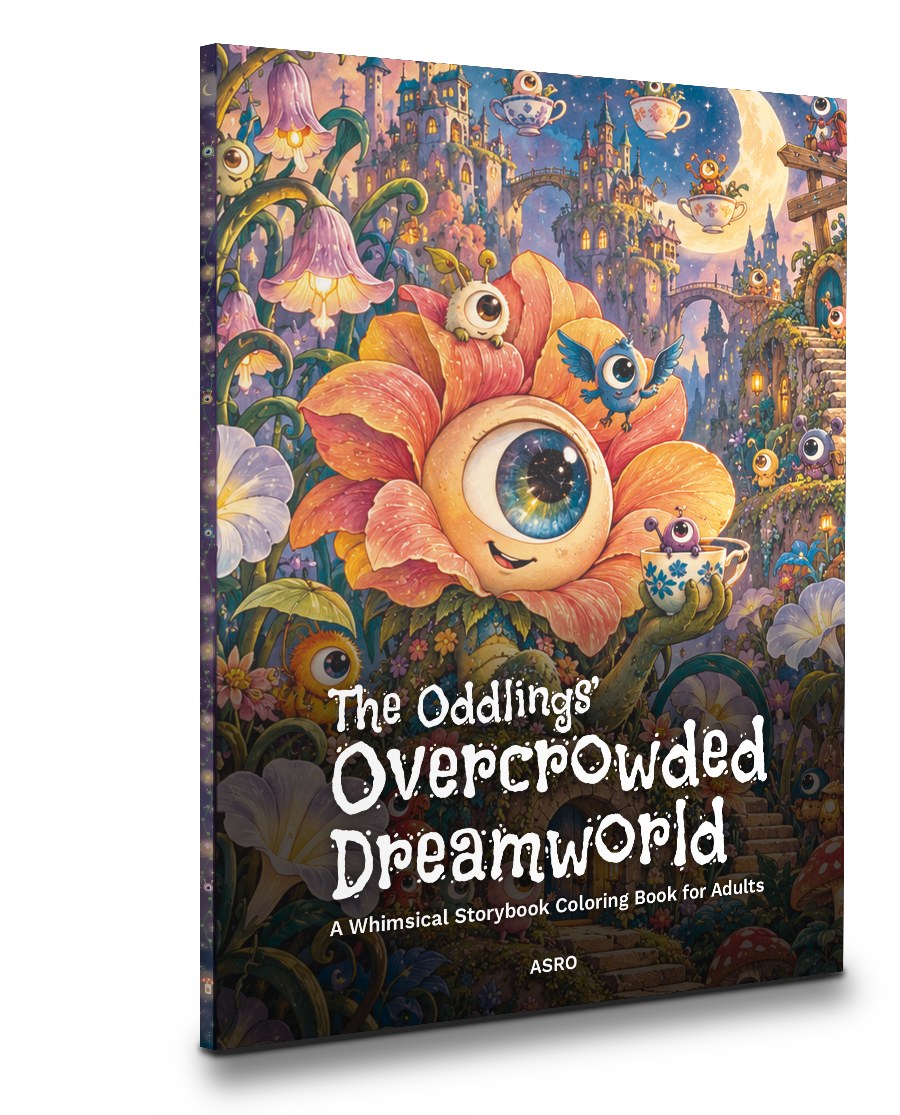
From the book: The Oddlings' Overcrowded Dreamworld
There is always one more oddling
It begins at a gate that leads nowhere. A sleepy gatekeeper hands Pip a brass compass, its needle spins once, and then it points straight at a tiny door hidden in the roots.
Read the story
From there the journey winds through fifty dream places: a sideways city, a library of lost socks, a bakery for night creatures, a balloon-whale harbor and a shop where the moon goes for repairs. Every scene is crowded with oddlings, small curious creatures with big eyes, peeking out from every corner.
Each place comes with a short story and a color idea, but there is no single right way to color a dream. Try the suggested palette, or invent a new mood of your own.

From the book: Human, Machine, and Imagination
Every tool changes the work
Before the camera moves, someone decides where it stands. Before a sentence does its work, someone decides what stays unsaid. Craft is made of choices, many of which the audience never sees.
Read the story
Generative AI can play a role at almost every point in that process: exploring the structure of a scene, comparing storyboard directions, sketching an arrangement. The question is not only whether a system can make something convincing, but whether the work gets better, whether the maker's judgment grows, and whether the process respects the people and materials involved.
ASRO believes that AI does not automatically take away a maker's voice. Makers decide what they delegate, what they accept and where their own judgment stays. Used critically, AI can support the development of craft. It still takes practice, careful judgment and responsibility.
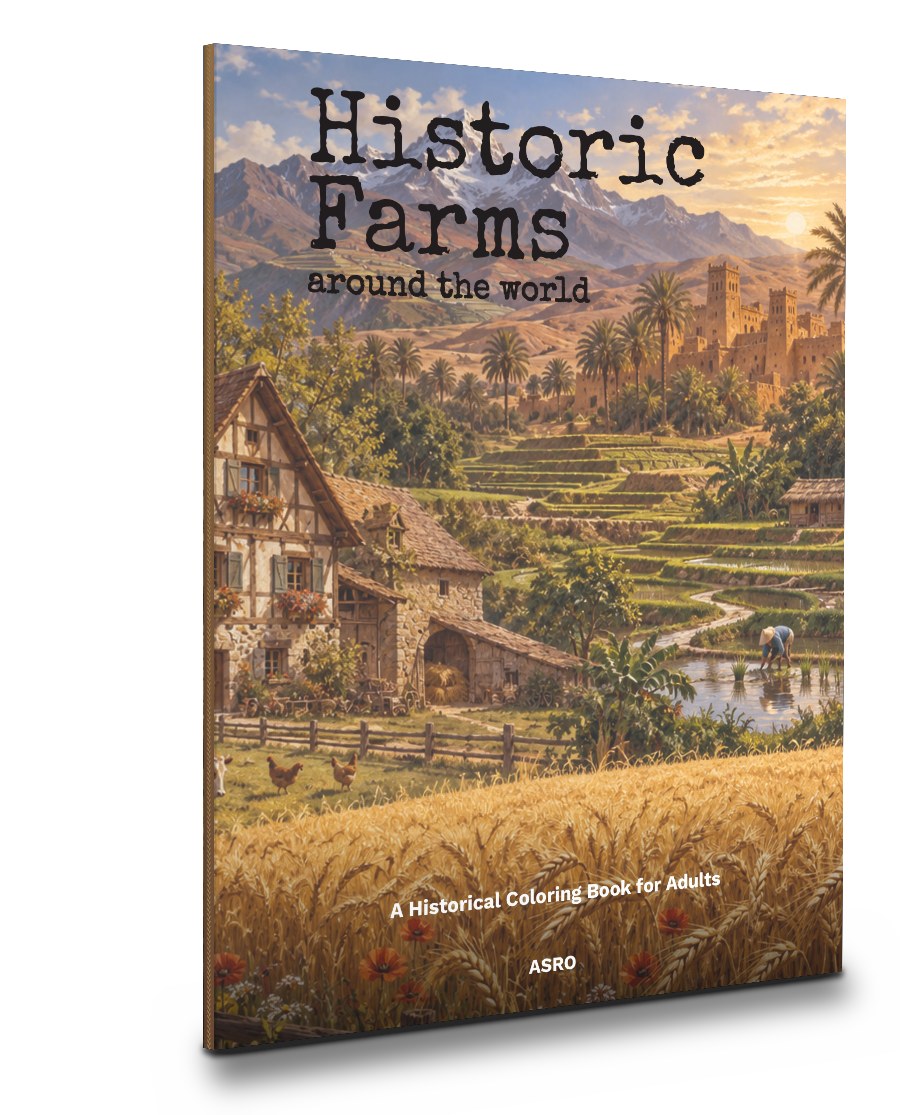
From the book: Historic Farms Around the World
Every farm fits its land
A Dutch dairy farm sits behind dikes and ditches, a Japanese rice terrace climbs the mountainside, and a medieval English manor divides its open fields into long strips. Each one is an answer to the same question: how do you make a living from this particular piece of land?
Read the story
This book visits thirty-five of those answers. Every scene comes with a short guide to the region and period, the crops and animals, the tools and buildings, and one historical detail you can often still see in the landscape today.
The scenes are snapshots, not complete histories. Farming changed within every region, and the work was shared unequally across households and societies. As you color, let the details invite a slower look at the ingenuity and daily labor behind rural life.

From the book: Rocking Animals
Every band has a story
Every music style comes with its own look: the leather of a metal stage, the glitter of disco, the hand-me-down amps of a garage band. Rocking Animals turns those styles into thirty-five bands you can color.
Read the story
The bands are invented, but the sounds are real. Each chapter starts with a short note on the style, then introduces the line-up and tells how the band came together, from a practice room behind an appliance shop to a festival finale that never wanted to end.
Some bands share one species, others bring very different animals together, and the line-ups range from duos to a twelve-member ensemble. There is no single way to color a song: follow the instruments, pick a stage palette, or make up a sound of your own.
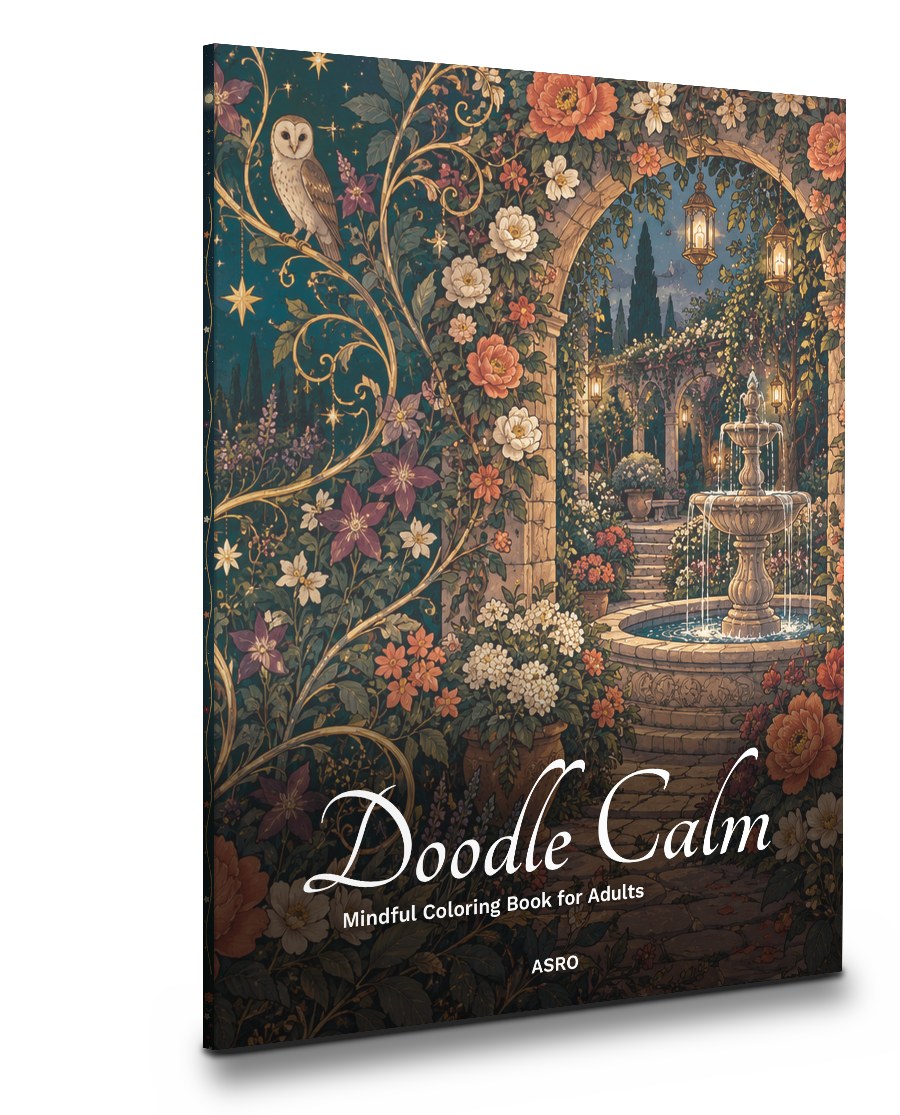
From the book: Doodle Calm
A little space to color
Doodles are what the hand draws when the mind wanders: spirals, leaves, little houses, waves. In Doodle Calm those small shapes grow into whole scenes, from a mushroom lane at dusk to a lighthouse path and a garden full of insects.
Read the story
Every illustration has its own facing page. A Scene to Imagine sets the mood, a Mindful Prompt invites you to pause and notice, Color at Your Own Pace offers a light tip, and the Color Suggestions give you a ready-made palette for days you don't want to decide.
There is no right way to color these pages. Follow a prompt, pick your own shades, or simply enjoy the patterns. The book is meant as a small ritual: a few quiet minutes, one page at a time.
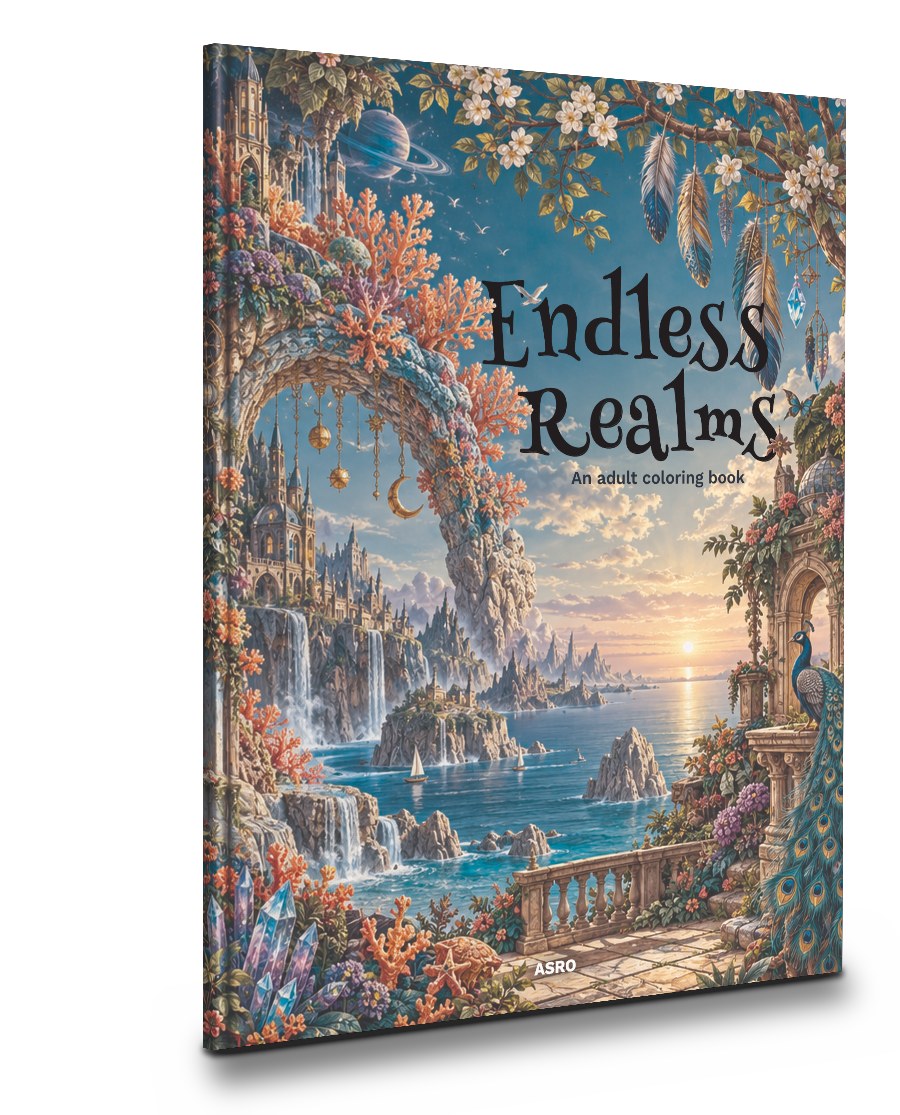
From the book: Endless Realms
Worlds you can get lost in
Artists have always loved images you can wander through. Around 1500, Hieronymus Bosch filled The Garden of Earthly Delights with so many tiny figures and strange buildings that viewers still find new details today.
Read the story
Endless Realms builds on that pleasure of looking closely. Each world has a clear main structure, such as a tree, a tower or an arch, that guides your eye, and then hides small discoveries in every corner: lanterns, keys, birds, doors and creatures.
The book is arranged from high detail to maximum detail, so you can start with calmer pages and move on to the most intricate worlds when you are ready. There is no right order and no right palette. Every realm becomes your own.
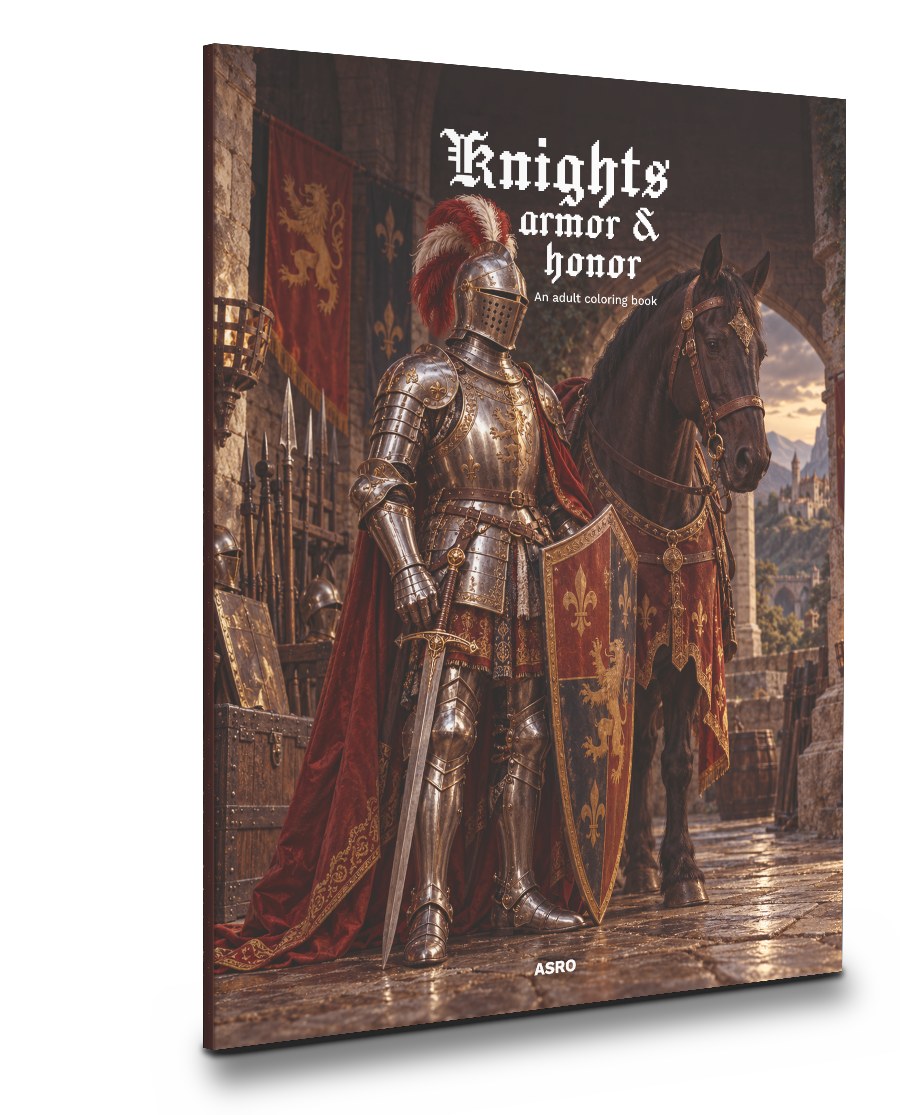
From the book: Knights, Armor and Honor
Not every warrior was a knight
When we think of armor, we often picture a knight in shining plate. But people protected themselves in battle for thousands of years before that, with bronze, leather, linen, wood and mail.
Read the story
Knights were a specific group: mounted warriors in medieval Europe, often of noble rank, bound by duties to a lord. Full plate armor only developed in the late Middle Ages. Greek hoplites, Roman legionaries, Viking warriors and Japanese samurai each had their own equipment and their own codes, and none of them were knights.
This book follows that long story with care. Each figure is an informed reconstruction based on finds, images and written sources, placed in a setting that fits its own time and culture, so every page you color also tells you something true.

From the book: Within the Frame
Every frame is a decision
A camera records whatever is in front of it. Framing decides what that is. Where you place the edges of the image, how close you stand, how high the camera sits and what stays in or out of focus all shape what an audience notices, feels and expects.
Read the story
Many framing choices have familiar names, such as the close-up, the over-the-shoulder shot or the rule of thirds. Others are simply useful ways to describe what a good image does: leaving space in front of a moving character, framing a figure inside a doorway, or hiding part of the action on purpose.
This book treats those names as tools, not rules. Each technique shows what it does, when it helps and what can go wrong, and the comparisons let you see two versions of the same moment side by side. The goal is simple: to frame each shot with intention.
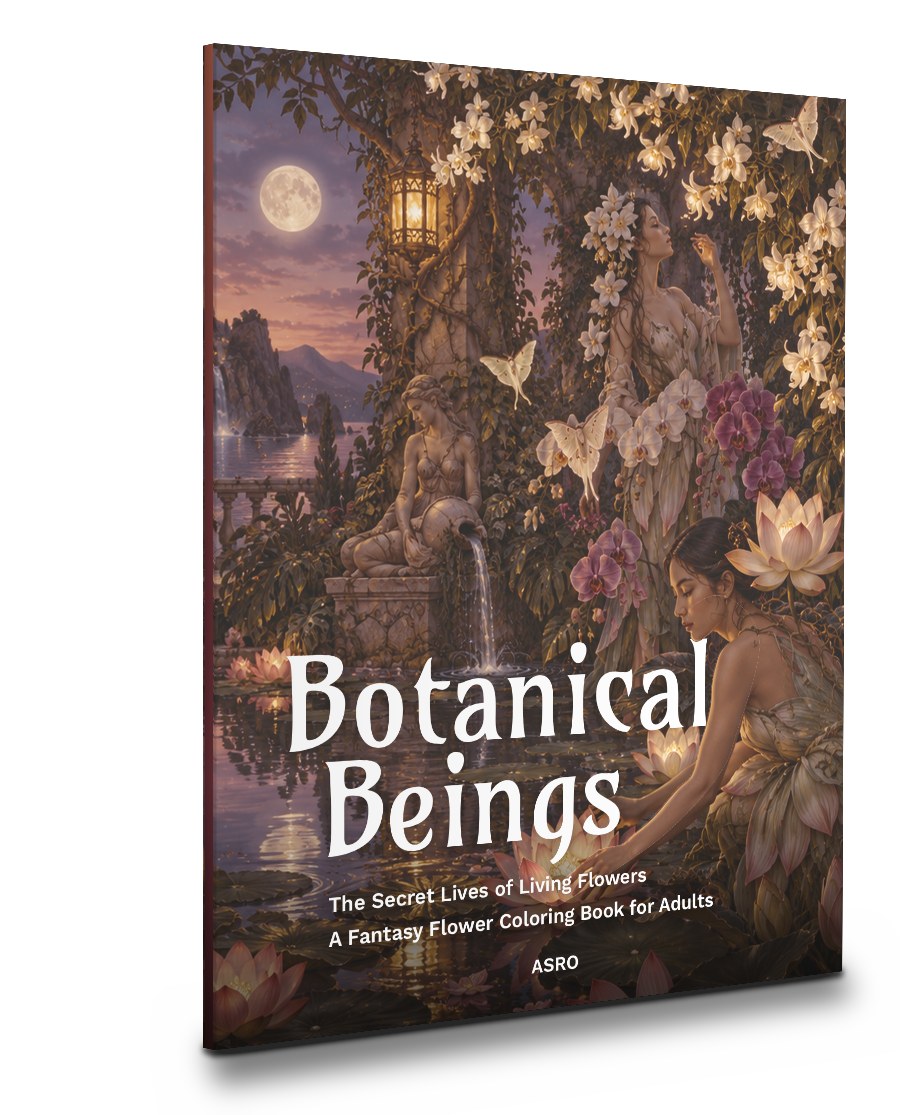
From the book: Botanical Beings
Every flower has a story
People have always told stories about flowers. In the nineteenth century, the language of flowers became a fashion in Europe: a single bloom could carry a message of love, friendship or regret, and books explained what each one meant.
Read the story
Some plants seem made for legends. The corpse flower can grow for years before it blooms, and then only for a few days. The night-blooming cactus known as the Queen of the Night opens after dark and closes again before morning.
Botanical Beings builds on that tradition. Each being grows from a real flower and its real habitat, and then the story takes over: a guardian, a messenger, a keeper of memories. The botany is true. The legends are yours to color.
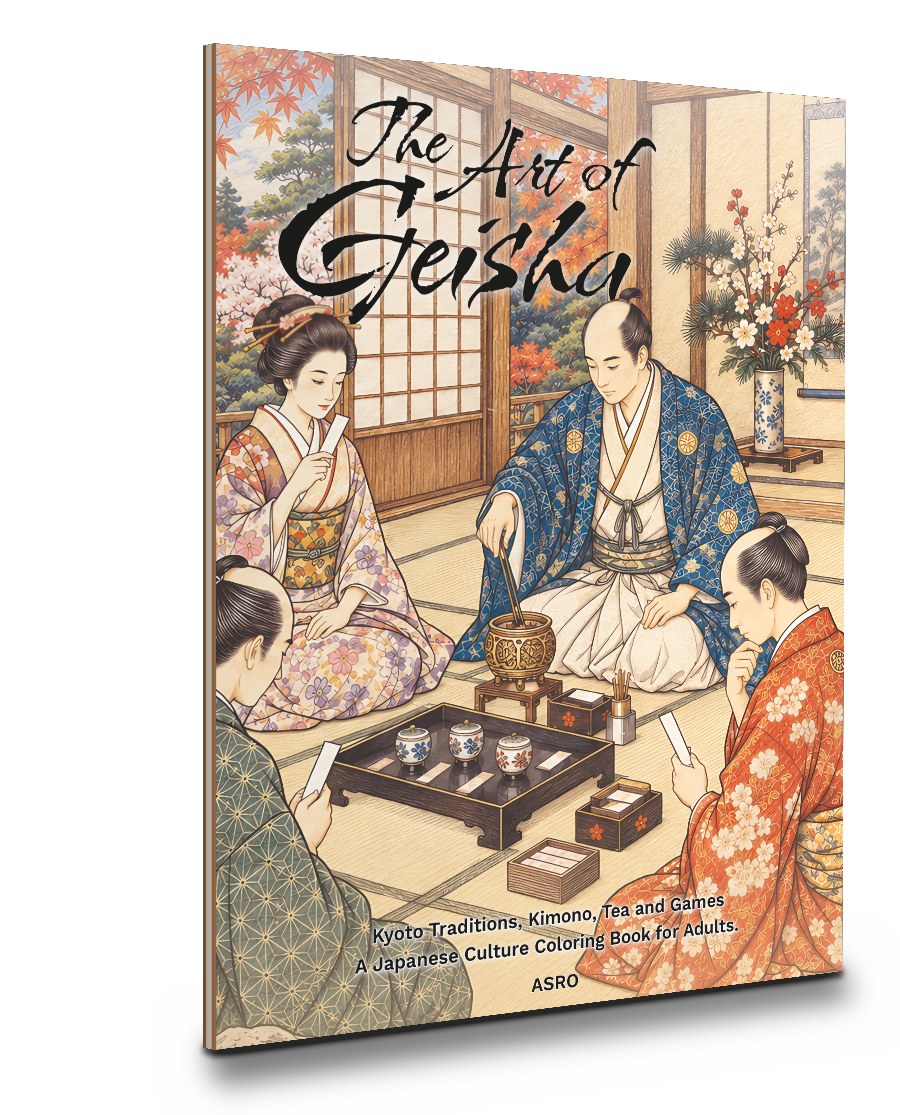
From the book: The Art of Geisha
Geiko, maiko and the flower towns
In Kyoto, the districts associated with geiko and maiko are called hanamachi, often translated as flower towns. Kyoto has five: Gion Kobu, Gion Higashi, Miyagawa-cho, Pontocho and Kamishichiken. They are living neighborhoods, with teahouses, theaters and homes woven into the city.
Read the story
Geiko is the Kyoto word for geisha: professional artists who study and perform dance, music and the art of hospitality. Maiko are their apprentices. Training, dress and daily routines differ from district to district, and from one generation to the next.
This book presents them as working artists within living traditions. The illustrations are respectful interpretations rather than portraits of real people or exact places, so you can color the atmosphere of a lantern-lit lane, a tea ceremony or a festival in your own way.

From the book: 150 Cuts & Transitions
A short history of the cut
Some of the earliest films were single, uninterrupted views of an event. Filmmakers soon discovered that joining shots could move a story from a street to a room, or from an action to its consequence. By the 1910s, a set of continuity habits had grown up to help audiences follow space and time: establishing shots, matching eyelines and cutting during movement.
Read the story
Continuity was never the only answer. In the 1920s, Soviet filmmakers showed that placing two images side by side could create a meaning neither had on its own, an idea now known as the Kuleshov effect. Montage became a way to think, not only to tell.
Tools kept changing what editors could try. Splicing film by hand made every cut a commitment. Digital, non-linear editing made it possible to test ten versions in an afternoon. The techniques in this book come from that whole history, and they all ask the same question: what should the audience feel at this exact moment?
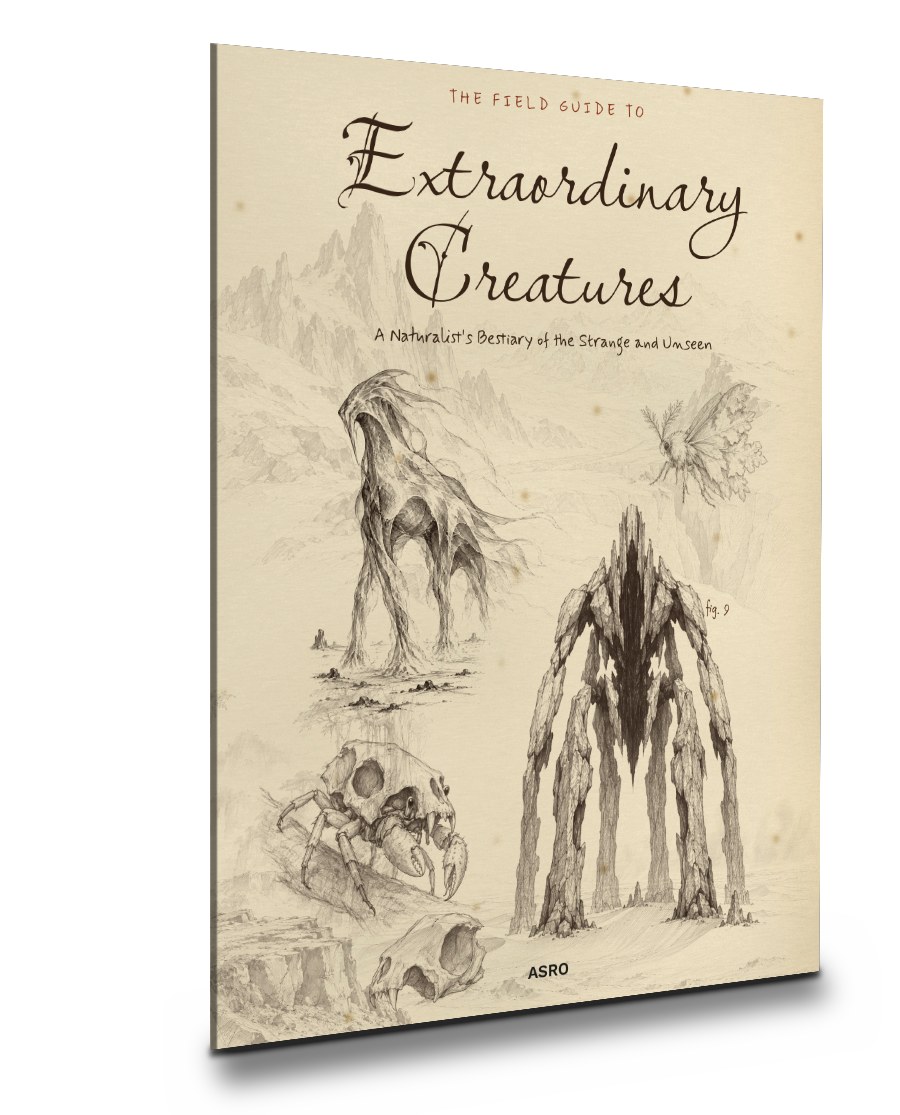
From the book: The Field Guide to Extraordinary Creatures
From medieval bestiaries to field guides
In the Middle Ages, bestiaries were among the most popular illustrated books in Europe. They described real animals next to imagined ones, such as the unicorn and the griffin, and gave each creature a lesson about how to live.
Read the story
Centuries later, naturalists took a different approach. Modern field guides, popularized by Roger Tory Peterson's bird guide of 1934, help you recognize an animal in the wild: exact drawings, clear field marks and short, practical notes.
This book brings the two traditions together. Its creatures come from an imagined world, but they are described with the patience and care of a real naturalist, one careful observation at a time.
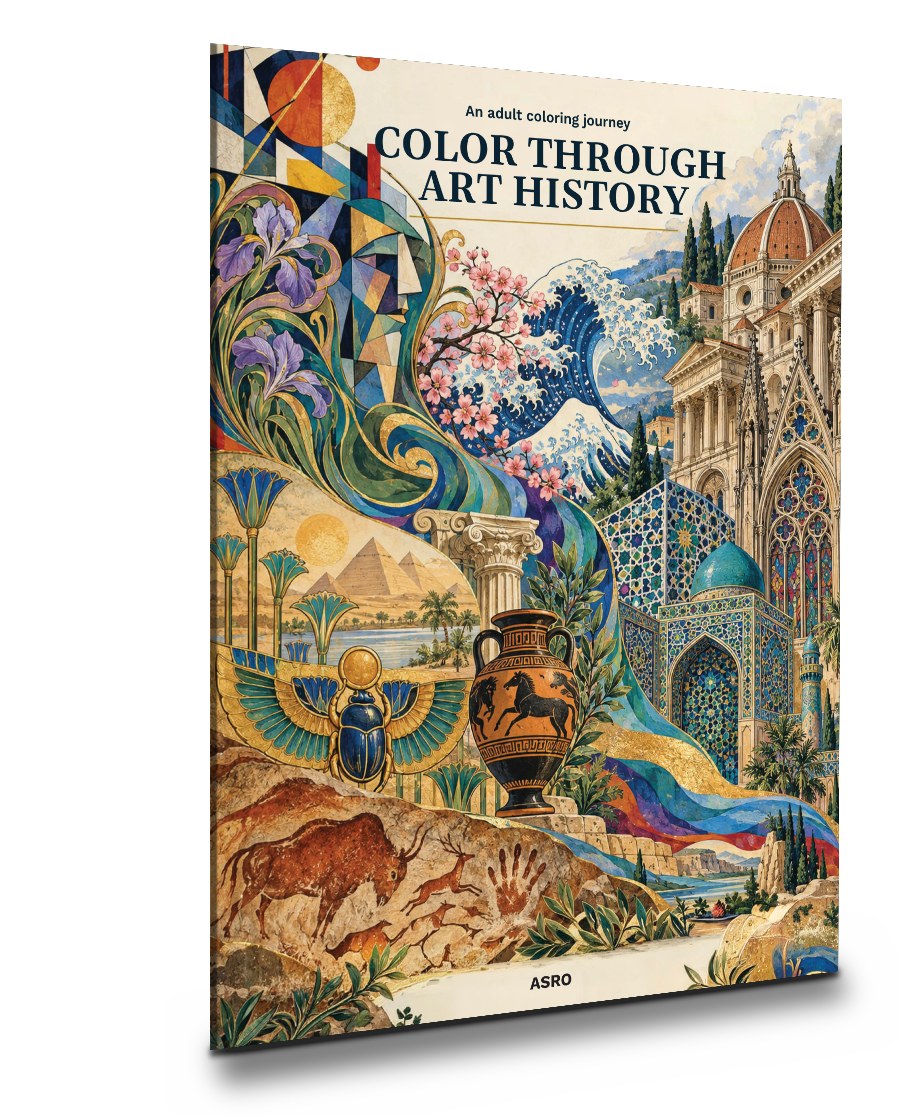
From the book: Color Through Art History
Every color has a history
The first artists painted with what they could find: red and yellow ochre from the earth, black from charcoal. Those few colors were enough for the animals on cave walls that still impress us today.
Read the story
Later, color became a craft and sometimes a luxury. The ancient Egyptians made Egyptian blue, one of the first synthetic pigments. In Renaissance Europe, ultramarine was ground from lapis lazuli and was so costly that painters often saved it for the most important figure in a painting.
In the nineteenth century, paint in tin tubes made it possible to work outdoors, and the Impressionists took their easels to riversides and fields. In this book, each era comes with color suggestions, so you can color with the palette of its time, or deliberately break from it.
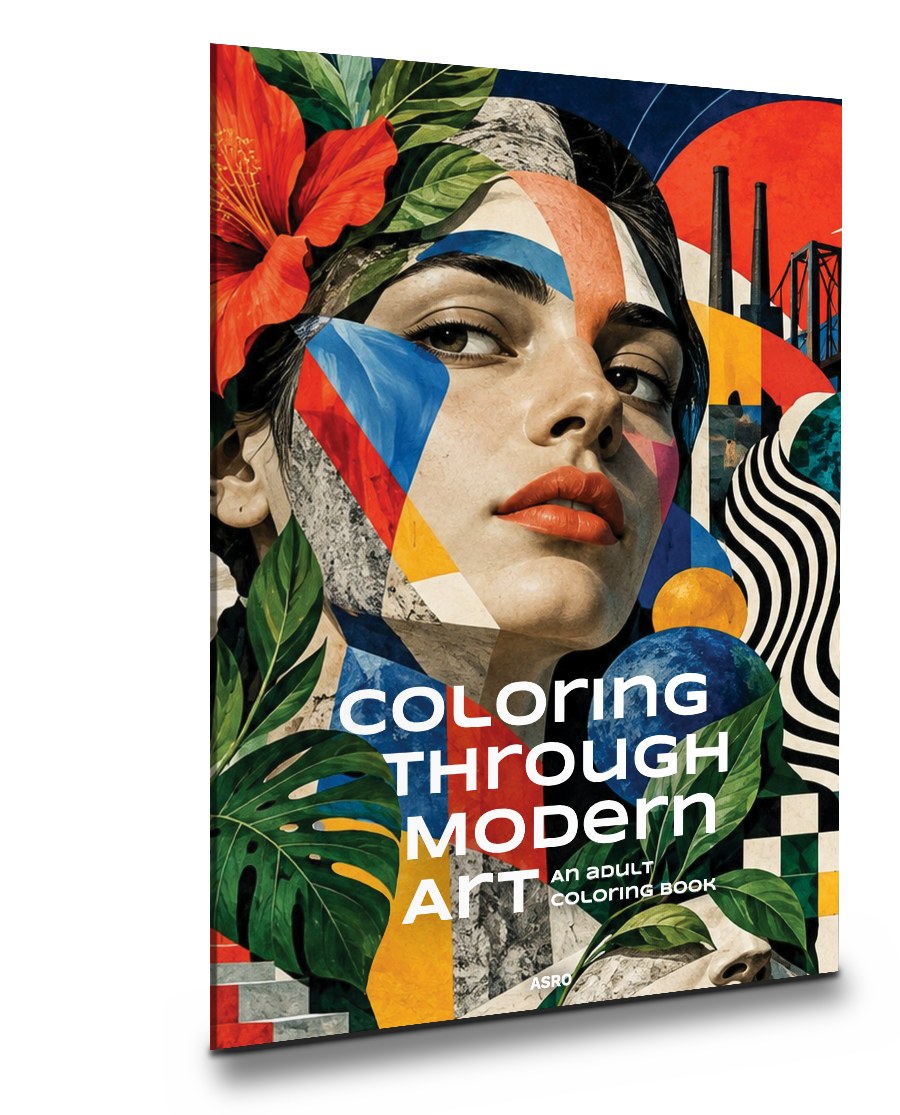
From the book: Coloring Through Modern Art
What makes art modern?
Around the middle of the nineteenth century, painters began to turn away from history, myth and religion. Realists such as Gustave Courbet painted ordinary people and everyday life, and that choice alone was seen as radical.
Read the story
At the same time, photography took over the task of recording what things look like. That freed artists to explore what only painting could do: color, light, emotion and, eventually, pure form. Movement followed movement, from Impressionism and Cubism to De Stijl, the Bauhaus and Pop Art.
Today, artists work with video, code, public space and the environment itself. This book follows that whole story, one movement and one page at a time, so you can see how each new idea grew out of the one before.
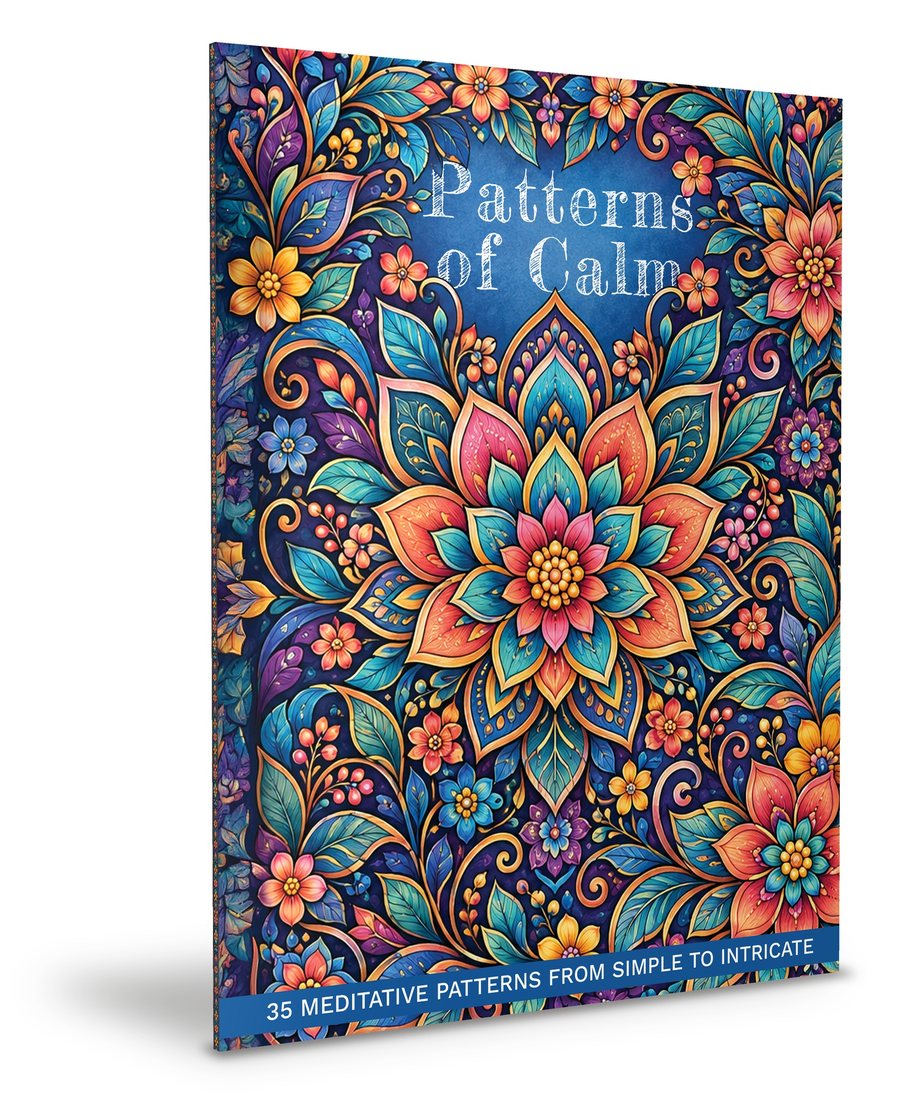
From the book: Patterns of Calm
Patterns, a very old way to slow down
People have been drawing repeating patterns for as long as they have been making things. You find them on prehistoric pottery, in Islamic tiles, in Celtic knots and in the mandalas of Hindu and Buddhist traditions, where creating a pattern is a form of meditation in itself.
Read the story
The appeal is simple. A repeating shape asks for just enough attention to quiet the rest of your thoughts, without asking you to make big decisions.
That is the idea behind this book. The patterns start simple and become richer, so you can choose how much focus you want to give each evening.

From the book: Luna the Cat: Saving Aliens in Space
Why stories and coloring go together
Young children love to hear the same story again and again, and they love to make something with their hands. Luna's book combines the two: every short story part has its own page to color.
Read the story
Hearing a story first gives a child something to think about while coloring. Is Luna happy here? What is the alien saying? Coloring then becomes a way to retell the story in their own colors.
That is also why the story is one continuous adventure. Children can pick up where they left off, page by page, until Luna falls asleep and dreams of her new friends.

From the book: Color Techno
From Detroit to Berlin: a short history of techno
Techno was born in Detroit in the mid-1980s. Three friends from the suburb of Belleville, Juan Atkins, Derrick May and Kevin Saunderson, mixed the cold synthesizers of European electronic music with the funk and soul of their city. The result sounded like the future: mechanical, hypnotic and made for dancing.
Read the story
The records crossed the Atlantic fast. In the UK they fed the acid house summers of the late eighties. In Berlin, the fall of the Wall in 1989 opened empty factories, bunkers and power stations, and techno moved in. Clubs like Tresor turned former vaults into dance floors, and the Love Parade brought the sound to the streets.
Since then techno has split into countless styles, from minimal to hard and melodic. What stayed is the setting you color in this book: dark rooms, strong light, and a crowd moving to one beat.

From the book: The Sassy Hippies
Flower power: where the hippie look came from
In the mid-sixties, young people in San Francisco's Haight-Ashbury district started dressing against the grain. Second-hand clothes, Indian prints, beads, bare feet and long hair were a way of saying no to war, suits and sameness.
Read the story
The look peaked in the Summer of Love of 1967 and reached a worldwide audience at Woodstock in 1969. Concert posters from that time, with their swirling letters and vibrating colors, became an art form of their own.
Flowers were the symbol of it all: protesters handed them to soldiers and wore them in their hair. This book borrows that spirit, with more humor and room for everyone.

From the book: Chilling Cats
Why cats sleep so much
An adult cat sleeps around 12 to 16 hours a day, and kittens and older cats even more. That is not laziness. Cats are built as hunters that save energy for short, intense bursts of action.
Read the story
Much of that time is light sleep. Ears keep turning and one eye may open at the smallest sound. Cats are also most active at dawn and dusk, which is why they nap through so much of the day.
They pick their spots carefully: warm, safe and preferably high up. That is exactly where you will find them in this book, on windowsills, cushions and stacks of books.

From the book: The World of Trees
The oldest trees on Earth
High in the White Mountains of California grows a Great Basin bristlecone pine known as Methuselah. It is more than 4,800 years old, which means it was already a young tree when the pyramids of Giza were built. Its exact location is kept secret to protect it.
Read the story
In Sweden, a Norway spruce called Old Tjikko looks modest, but its root system has kept sprouting new trunks for around 9,500 years.
Trees like these survive by growing slowly, in harsh places where little else competes. They are a good reminder of what this book is about: taking your time.
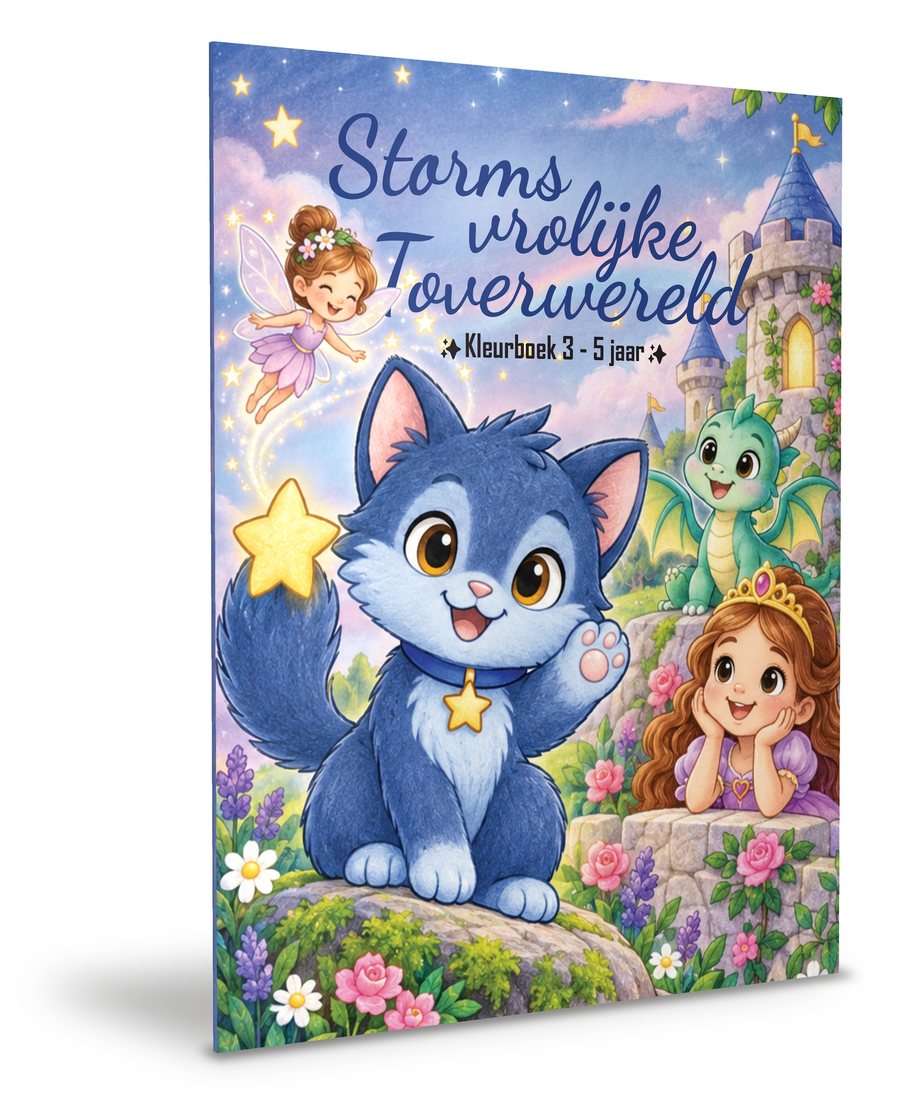
From the book: Storms vrolijke Toverwereld
Coloring with little hands
For young children, coloring is about much more than staying inside the lines. Holding a crayon builds the small muscles they will later use for writing, and choosing colors is one of their first chances to make their own decisions.
Read the story
At ages 3 to 5, big shapes and clear outlines work best. That is why every page in this book has room to scribble freely and still end up with a picture to be proud of.
Praise the effort rather than the result, and hang the finished page somewhere they can see it. Nothing motivates more.